EV Infrastructure and Grid Integration
Scaling electric mobility requires more than battery tech; it demands robust DC fast charging topologies, Megawatt standards for heavy duty, and bidirectional V2G capabilities.
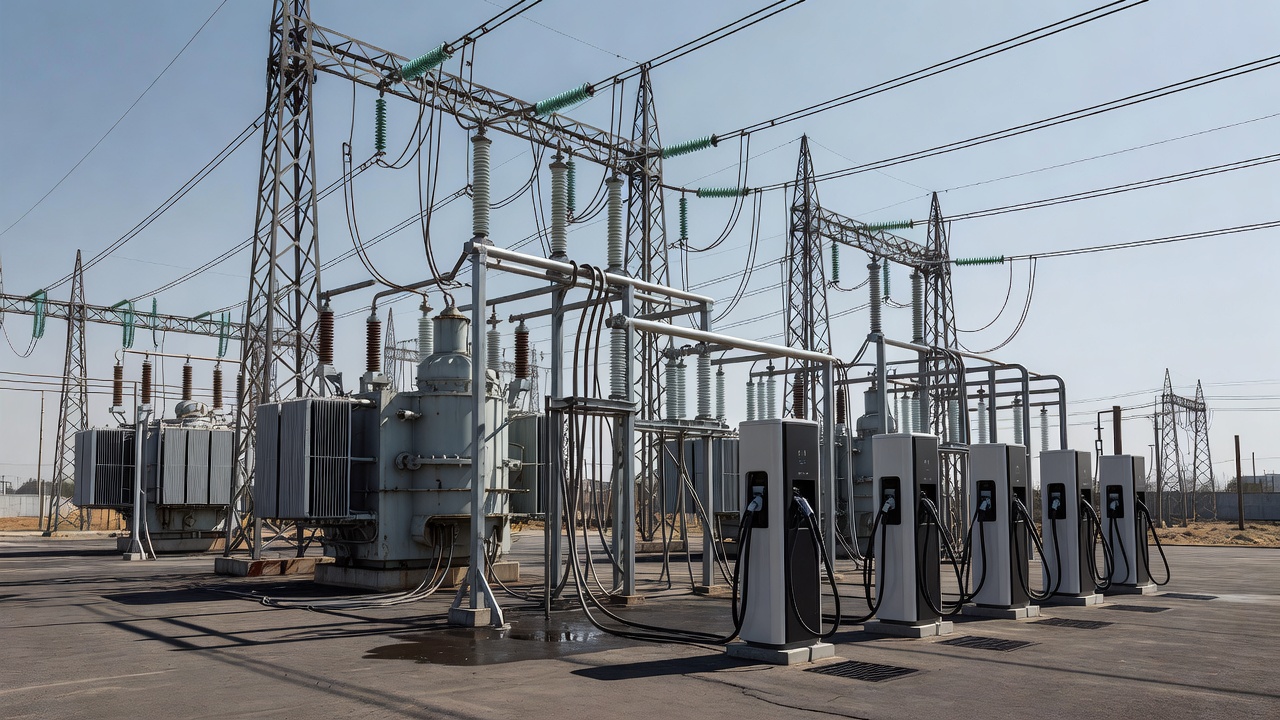
The mass adoption of Electric Vehicles (EVs) creates unprecedented demands on regional electrical grids. Transitioning millions of combustion-engine vehicles to battery power shifts energy consumption from distributed liquid fuel networks to centralized electrical generation and distribution infrastructure. Managing this transition relies heavily on innovations in charging hardware, thermal management, and smart-grid software integration.
Charging Topologies: AC Destination vs. DC Fast Charging
Electric vehicle charging is broadly categorized by current type. Level 1 and Level 2 chargers supply Alternating Current (AC) to the vehicle. Because battery cells store Direct Current (DC), an onboard inverter is required to rectify the AC power. The capacity of this onboard equipment typically bottlenecks AC charging speeds to between 7.2 kW and 22 kW, making it ideal for overnight or workplace destination charging where vehicles sit idle for hours.
Conversely, DC Fast Charging (DCFC) bypasses the vehicle's onboard inverter, delivering direct current straight to the battery pack. Modern 800-volt architectures in passenger vehicles permit charge rates exceeding 350 kW, capable of replenishing 10-80% state-of-charge (SoC) in under 20 minutes. Implementing DCFC stations requires substantial utility upgrades, often necessitating dedicated medium-voltage transformers and heavy liquid-cooled cables to manage thermal output during peak current transfer.
Megawatt Charging System (MCS) for Heavy Transport
While 350 kW is sufficient for passenger vehicles, electrifying commercial logistics—such as Class 8 long-haul trucks and ferries—requires significantly higher throughput to align with mandatory driver rest periods. The Megawatt Charging System (MCS) standard is designed to support a maximum voltage of 1,250 V and 3,000 A, yielding a theoretical peak power of 3.75 MW.
Deploying MCS hubs along freight corridors presents severe localized grid strain. A trucking depot charging ten vehicles simultaneously via MCS draws power equivalent to a small industrial manufacturing plant. To mitigate this, station operators are increasingly integrating localized stationary battery energy storage systems (BESS). These stationary batteries trickle-charge from the grid during off-peak hours and discharge rapidly to the vehicles, buffering the immediate demand on local utility infrastructure.
Vehicle-to-Grid (V2G) and Bidirectional Power
Rather than viewing EVs merely as grid loads, smart mobility frameworks treat them as distributed energy resources. Vehicle-to-Grid (V2G) technology utilizes bidirectional chargers, allowing a vehicle to not only draw power but also return it to the grid during peak demand events.
Key applications of bidirectional technology include:
- Grid Load Balancing: Utilities can draw micro-amounts of power from thousands of connected vehicles simultaneously to stabilize grid frequency without spinning up fossil-fuel peaker plants.
- Vehicle-to-Home (V2H): A fully charged EV with a 100 kWh battery can power a standard residential home for several days during an outage, functioning as a decentralized emergency backup.
- Peak Shaving: Fleet operators (such as electric school buses) can charge vehicles overnight at low commercial rates and sell power back to the grid during late afternoon peak pricing windows, offsetting total cost of ownership.
Charging Standard Variations
| Standard Protocol | Current Type | Max Voltage | Typical Max Output | Primary Use Case |
|---|---|---|---|---|
| J1772 / Type 2 | AC | 240V / 400V | 19.2 kW / 22 kW | Residential / Workplace |
| CCS (Combined) | DC | 1,000V | 350+ kW | Passenger Fast Charging |
| NACS (J3400) | AC / DC | 1,000V | 250+ kW | Unified Passenger Standard |
| MCS | DC | 1,250V | 3.75 MW | Commercial Heavy-Duty |
Battery Degradation Factors
A frequent technical concern with high-speed DC charging and V2G cycling is the acceleration of lithium-ion battery degradation. Sustained high C-rates (the rate of charge relative to capacity) generate substantial internal resistance and heat. Advanced thermal management systems (liquid cooling loops circulating glycol through the battery pack) are crucial to maintaining cell temperatures within the optimal 20°C to 30°C window. Furthermore, battery management systems (BMS) intelligently taper the charge curve as the battery approaches 80% SoC to prevent lithium plating on the anode, preserving long-term pack health.