Drone Delivery and Airborne Logistics
An analysis of Unmanned Aircraft System Traffic Management (UTM), payload limitations, battery density bottlenecks, and acoustic optimization for urban spaces.
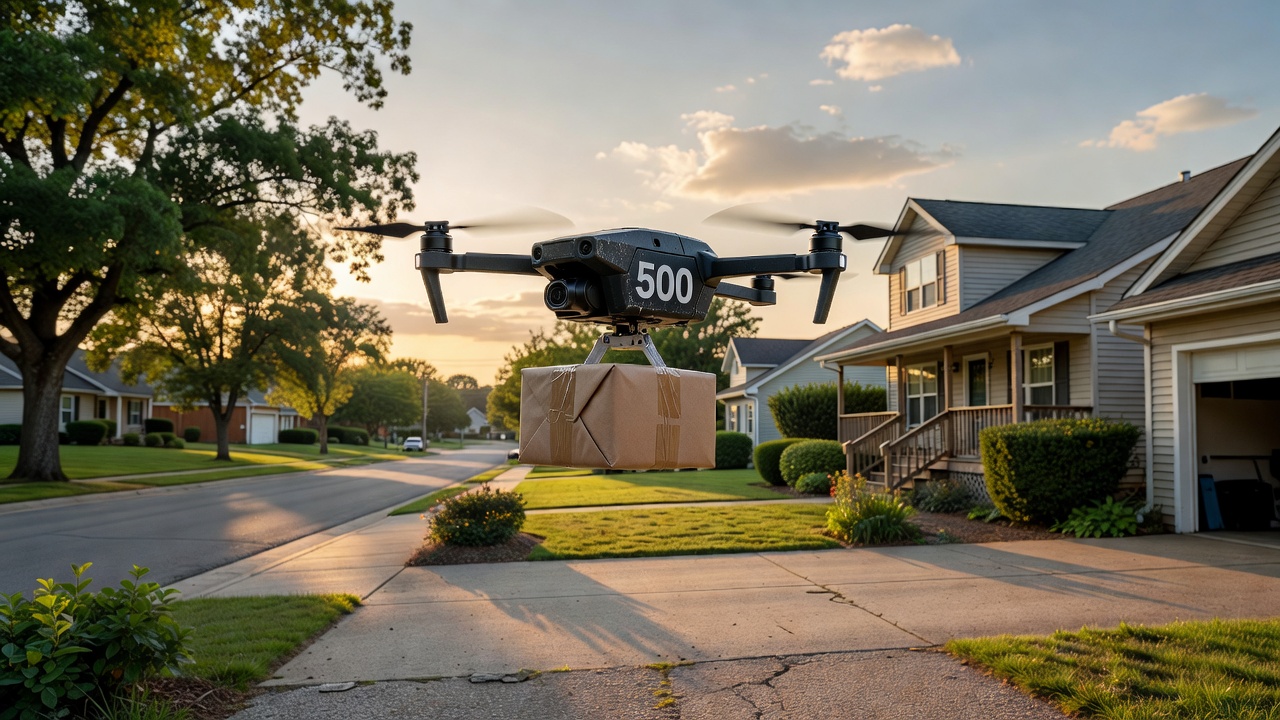
The integration of Unmanned Aerial Vehicles (UAVs) into last-mile logistics networks aims to bypass terrestrial congestion entirely. Capable of executing point-to-point deliveries at high speeds, drones present a compelling solution for time-sensitive, low-weight cargo such as medical supplies and urgent retail orders. However, transitioning from demonstration flights to scalable, automated commercial operations requires overcoming severe physical, computational, and regulatory constraints.
Aircraft Configurations and Payload Limits
Commercial delivery drones predominantly utilize electric propulsion, constrained heavily by the specific energy of current lithium-polymer (LiPo) and lithium-ion batteries. Airframe design dictates the balance between range, speed, and payload capacity:
- Multi-Rotor (Quadcopters/Hexacopters): These offer precise hovering and vertical takeoff and landing (VTOL) capabilities, essential for residential drop-offs. However, they are aerodynamically inefficient in forward flight, generally limiting operational radii to under 10 miles with payloads under 5 lbs.
- Fixed-Wing VTOL Hybrids: These airframes utilize rotors for takeoff before transitioning to fixed-wing forward flight relying on aerodynamic lift. This dramatically improves energy efficiency and range, extending operations to 30-50 miles, though their transition mechanisms add mechanical complexity and weight.
Unmanned Traffic Management (UTM) Integration
Unlike traditional aviation, which relies on centralized air traffic control and vocal communication, low-altitude drone logistics require automated, decentralized traffic management. The Unmanned Aircraft System Traffic Management (UTM) framework is a digital infrastructure being developed collaboratively by aviation authorities and private operators.
A functional UTM must execute several critical automated tasks:
- Strategic Deconfliction: Before takeoff, the drone's flight plan is registered in a shared cloud environment to ensure it does not intersect with other planned routes.
- Dynamic Rerouting: If temporary flight restrictions (TFRs) are established (e.g., a medical helicopter responding to an emergency), the UTM must automatically calculate and transmit new waypoints to all airborne drones in the vicinity.
- Remote Identification (Remote ID): Drones must broadcast their unique identifier, location, altitude, and velocity, serving as a digital license plate for airspace security and public accountability.
Environmental and Acoustic Constraints
Beyond aerodynamics, the widespread deployment of delivery drones faces significant environmental friction. High wind speeds and precipitation severely limit operational uptime; rain can degrade sensor fidelity (particularly optical flow cameras used for ground tracking), and heavy gusts require constant motor adjustments that rapidly drain battery reserves.
Acoustic pollution is an equally limiting factor for urban adoption. Multi-rotor drones generate high-frequency, tonal noise profiles that are particularly grating to the human ear. Manufacturers are investing heavily in acoustic engineering to mitigate this:
- Rotor Pitch Modification: Altering blade shapes to spread noise across a broader frequency spectrum, creating a "whoosh" rather than a high-pitched whine.
- RPM Synchronization: Preventing phase interactions between adjacent rotors that create pulsating noise beats.
- Variable Delivery Altitudes: Cruising at altitudes above 200 feet to minimize ground noise, dropping down only via a tether system to release the package without bringing the rotors close to ground level.
Regulatory Pathways: Beyond Visual Line of Sight (BVLOS)
The linchpin of drone logistics profitability is automation. Current regulations in many jurisdictions mandate that the remote pilot-in-command must maintain visual contact with the aircraft. This 1:1 ratio negates the economic benefits of automation. The industry is navigating complex certification pathways to achieve widespread approval for Beyond Visual Line of Sight (BVLOS) operations, which requires proving that onboard Detect and Avoid (DAA) systems—combining radar, LiDAR, and cameras—can reliably identify and maneuver away from uncooperative aircraft (like birds or non-transmitting light aircraft) without human intervention.